Rote learning and endless assessment books are not enough to succeed in Singapore’s demanding mathematics curriculum. To truly excel, students need strong problem-solving skills and a genuine understanding of concepts.
Math games and puzzles offer a powerful, fun-filled solution. They transform practice into an engaging activity that builds critical thinking and confidence. This guide lists the most common and effective games and puzzles for primary and secondary students, helping you turn math into an enjoyable family experience that yields real academic results.
Top 5 Math Board and Card Games for Primary School Students
For primary school students, building a rock-solid foundation in arithmetic, number sense, and strategic thinking is essential for tackling the PSLE. These board and card games are perfect for making those fundamental skills second nature.
1. Monopoly
This classic board game is a fantastic, practical tool for arithmetic. As players navigate the board, they are constantly engaged in calculations: adding up dice rolls, subtracting rent payments, multiplying property costs, and managing their total cash flow.
This repetitive, in-context practice of addition, subtraction, and multiplication is far more engaging than drills. Beyond basic sums, Monopoly also introduces concepts of financial literacy, long-term planning, and risk-reward analysis, which are early forms of strategic thinking.
2. Sleeping Queens
Sleeping Queens is a whimsical card game that brilliantly disguises mental math practice. The core mechanic involves using number cards to “wake up” queens, requiring players to form addition equations.
For example, a player might use a ‘3’ card, a ‘5’ card, and an ‘8’ card to claim the Queen of 8 because 3 + 5 = 8. This encourages players to constantly scan their hand for number combinations, significantly speeding up their mental addition and strengthening their number sense in a fast-paced, competitive environment.
3. UNO
While seemingly simple, UNO is an excellent game for reinforcing number and colour recognition, matching, and quick thinking. To increase the mathematical challenge, you can introduce simple house rules.
For instance, players could be required to add the number of the card they are playing to the previous one, or when a Draw 2 or Draw 4 card is played, the next player must calculate the total value of the cards drawn. These small tweaks turn a simple matching game into a rapid-fire arithmetic drill.
4. Blokus
Blokus is a pure strategy game that is fantastic for developing spatial reasoning and geometric intuition. Players must fit their Tetris-like pieces onto the board, with the rule that their own pieces can only touch at the corners.
This forces them to visualise how shapes fit together, rotate them mentally, and plan their placement to maximise their area while blocking opponents. These skills are directly transferable to the geometry and measurement topics in the MOE syllabus, helping students better understand concepts of area, perimeter, and spatial orientation.
5. Chess
Chess is arguably one of the best games for developing the higher-order thinking skills required for challenging PSLE problem sums. It teaches children to think several steps ahead, analyse multiple possibilities, and adapt their strategy based on their opponent’s moves.
This process of planning, executing, and adjusting mirrors the heuristic problem-solving skills that Singapore math emphasizes. Chess builds patience, concentration, and the ability to break down a complex situation into smaller, manageable parts, a crucial skill for tackling multi-step word problems.
Top 5 Math Puzzles for Primary School Students
Puzzles are a brilliant way for children to engage in solo play, developing deep focus, patience, and logical reasoning skills. They offer a pressure-free environment to wrestle with a problem until a solution is found.
1. Sudoku
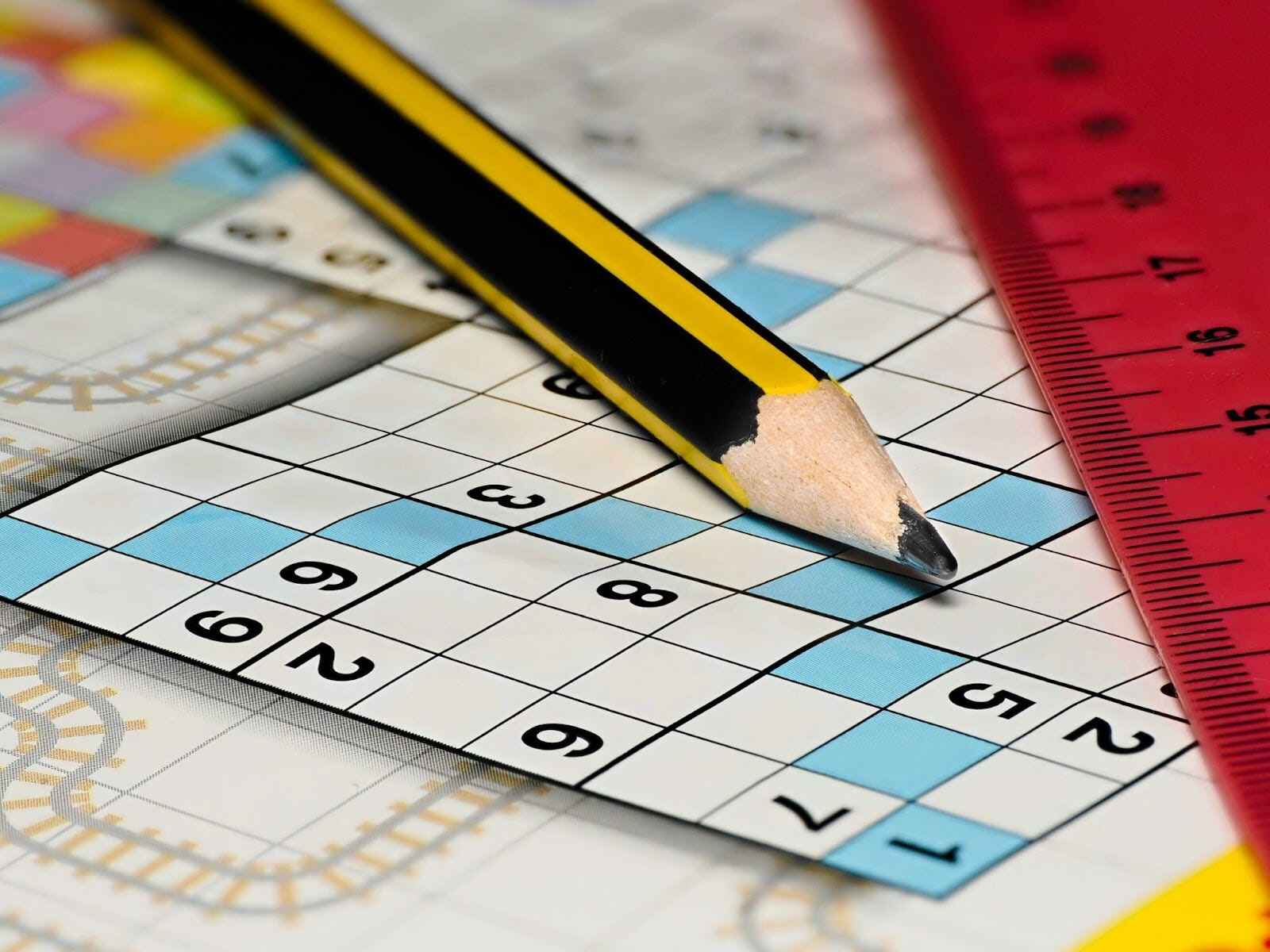
Sudoku is a pure logic puzzle that requires no arithmetic but is a powerhouse for developing the thinking skills needed for math. The goal is to fill a 9×9 grid so that each row, column, and 3×3 section contains all of the digits from 1 to 9.
This process trains the brain in logical deduction, pattern recognition, and systematic elimination. It teaches children to work with constraints and think methodically, which is an invaluable skill for algebra and complex problem-solving later on.
2. KenKen
Often described as “Sudoku with a mathematical twist,” KenKen is an outstanding puzzle for drilling arithmetic. Like Sudoku, it involves filling a grid with digits. However, the grid is also divided into “cages,” each with a target number and an operation (e.g., “12+,” “2÷”).
The numbers within the cage must combine to produce the target number using the specified operation. This forces players to constantly perform mental calculations, strengthening their fluency in addition, subtraction, multiplication, and division within a fun, logical framework.
3. Tangrams
A Tangram is an ancient Chinese puzzle consisting of seven flat shapes, called tans, which are put together to form specific shapes or silhouettes. This puzzle is an exceptional tool for building an intuitive understanding of geometric properties.
Children learn about triangles, squares, and parallelograms, and how these shapes can be rotated, flipped, and combined to create new ones. It improves spatial visualisation skills and develops a hands-on feel for concepts like symmetry, congruence, and area.
4. Kakuro (Cross-Sums)
Kakuro is often called a mathematical crossword puzzle. The grid is filled with digits, where clues are provided in the form of a target sum for a given row or column segment.
Players must fill the blank squares with digits from 1 to 9 that add up to the clue, without repeating any digit in that segment. This provides relentless practice in addition and number decomposition (finding which numbers add up to a total), which is a core component of number sense.
5. Logic Grid Puzzles
These puzzles present a story-like scenario and a series of clues, and the solver must use a grid to deduce the relationships between different sets of items (e.g., matching five people to their pets, jobs, and hometowns).
To solve them, one must meticulously analyse each clue, cross-reference information, and make logical deductions to eliminate possibilities. This process is a direct simulation of the thinking required to understand and solve complex, multi-variable word problems in math.
Top 5 Math Games for Secondary School Students
As students enter secondary school, mathematics becomes more abstract with the introduction of algebra, probability, and advanced geometry. The right games can help bridge the gap between concrete numbers and abstract concepts, making them easier to understand and apply.
1. Catan
Catan is a modern classic board game that revolves around resource management and probability. Players settle on an island, and resource production is determined by the roll of two dice. This provides a constant, engaging lesson in probability.
Players quickly learn that numbers like 6, 7, and 8 are rolled more frequently than 2 or 12, and they must use this understanding to inform their strategy. It’s a practical and dynamic way to experience concepts of probability distribution, resource optimisation, and strategic negotiation.
2. The 24 Game
This simple card game is a deceptively challenging mental math workout. Each card displays four numbers, and the objective is to use all four numbers exactly once, along with any combination of addition, subtraction, multiplication, and division, to arrive at the number 24.
The 24 Game pushes students to think flexibly about numbers and operations, enhancing their creativity in problem-solving. It also heavily reinforces the correct order of operations (BODMAS/PEMDAS), a critical skill in algebra.
3. DragonBox Algebra
DragonBox is a series of award-winning educational apps, and its algebra version is particularly brilliant. It introduces algebraic concepts without the player even realising it. The game starts with pictures and puzzles, which are gradually replaced by variables and numbers as the player progresses.
By the end, the player is intuitively solving complex linear equations. It strips away the fear and intimidation often associated with algebra, building a solid conceptual foundation through interactive, game-based learning.
4. Prodigy Math Game
Prodigy is an online, adaptive role-playing game (RPG) that is aligned with the Singapore curriculum. Students create an avatar and explore a fantasy world, but to cast spells and battle monsters, they must correctly answer math questions.
The game’s adaptive algorithm adjusts the difficulty of the questions based on the student’s performance, ensuring they are always challenged but not overwhelmed. It covers a wide range of topics from Primary 1 all the way to Secondary 4, making it a comprehensive tool for targeted practice.
5. Code Master Programming Logic Game
This is a single-player puzzle game that cleverly teaches the fundamentals of programming logic without a computer. Players must use a set of action tokens to create a “program” that guides their avatar through a map to collect crystals.
It builds skills in sequential reasoning, problem decomposition, and conditional logic. These skills are directly related to understanding functions, variables, and algorithms in mathematics, providing a solid foundation for both higher-level math and computational thinking.
Top 5 Math Puzzles for Secondary School Students

For older students, puzzles provide a sophisticated mental workout that sharpens the abstract and logical thinking skills needed for the O-Levels and beyond. These puzzles challenge them to think critically and apply advanced problem-solving strategies.
1. Cryptarithmetic Puzzles
In a cryptarithmetic puzzle, letters of the alphabet are used to represent digits in an arithmetic problem (e.g., SEND + MORE = MONEY). The challenge is to deduce the numerical value of each letter. These puzzles are essentially systems of equations in disguise and are a fantastic way to develop algebraic thinking. Solvers must use logic, number properties (like even/odd numbers and divisibility rules), and systematic trial and error to crack the code.
2. Nonograms (Picross)
Also known as Picross or Griddlers, Nonograms are picture logic puzzles. The solver uses numbers provided for each row and column to determine which cells in a grid should be filled in, eventually revealing a hidden picture.
These puzzles require no prior knowledge, only pure logical deduction. They train the brain to follow meticulous, step-by-step reasoning and to cross-reference information from multiple sources (the row and column clues), a skill essential for complex geometric proofs or multi-step algebraic problems.
3. Advanced Sudoku Variants (e.g., Killer Sudoku)
For students who have mastered classic Sudoku, variants like Killer Sudoku add a compelling mathematical layer. In Killer Sudoku, the standard Sudoku rules apply, but the grid also contains “cages” with dotted outlines.
The sum of the digits in each cage must equal a specified number. This combines the logical deduction of Sudoku with the number decomposition skills of Kakuro, forcing players to use both logic and arithmetic simultaneously to solve the puzzle.
4. Einstein’s Riddle (Zebra Puzzle)
This is a famous and notoriously difficult logic puzzle. It presents a set of clues about a group of people with different attributes (e.g., nationality, pet, drink, house colour) and challenges the solver to figure out all the correct combinations.
There is no guesswork involved; the solution can only be reached through pure deduction. Tackling puzzles like this builds a student’s ability to manage and synthesise a large amount of information and constraints, which is an excellent preparation for the most challenging problems in secondary math.
5. Online Brain-Training Puzzles
Websites and apps like Brilliant.org offer a vast library of interactive puzzles and problems specifically designed to teach mathematical concepts. These platforms present challenges in topics like number theory, probability, geometry, and computer science in an engaging, visual way.
The puzzles are often curriculum-aligned and provide step-by-step explanations, allowing students to explore advanced topics and hone their problem-solving skills independently.
How to Integrate Games and Puzzles into Your Child’s Routine
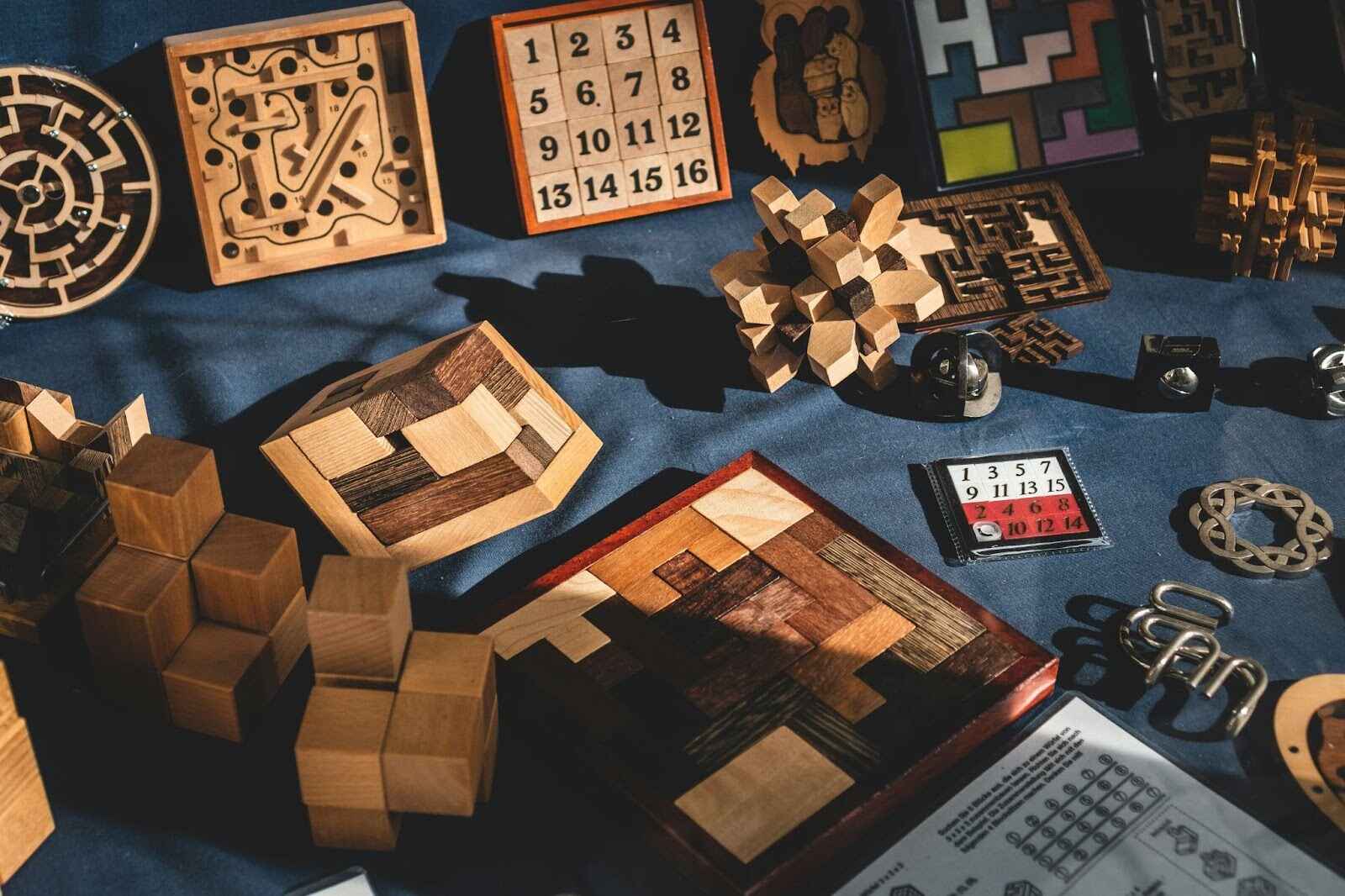
Knowing which games to use is only the first step. The key is to make them a natural and enjoyable part of your child’s life.
Make it a Family Activity
Designate one evening a week as a family game night. When children see their parents enjoying these games, it removes the pressure and reframes the activity as fun family time rather than “math homework.” This shared experience can also open up conversations about strategy and problem-solving.
Match the Activity to Their Learning Needs
Pay attention to what your child is currently learning in their math class. If they are studying fractions, find a game that incorporates them. If they are struggling with geometry, break out the Tangrams or Blokus. Using games to reinforce current school topics makes the learning more timely and impactful.
Focus on Fun, Not Just Winning
The primary goal is engagement and learning, not victory. Encourage discussion about the choices made during the game. Ask questions like, “Why did you make that move?” or “What’s another way we could solve this puzzle?” This shifts the focus from the outcome to the thinking process, which helps build a healthy and resilient attitude towards challenges.
Conclusion On Math Games and Puzzles
Math games and puzzles are far more than just a pleasant distraction; they are essential learning tools for any Singaporean student. They effectively shift the focus from rote memorisation to genuine understanding, building the critical thinking, logical reasoning, and heuristic problem-solving skills that are the foundation of the Singapore math curriculum.
By introducing the games and puzzles on this list, from Monopoly and Sudoku for primary students to Catan and Cryptarithmetic for secondary levels, you can significantly reduce math anxiety and foster a true interest in the subject.
Integrating these activities into your family routine is a powerful, proven strategy to make learning effective and enjoyable, giving your child a distinct advantage on their academic journey.
Help your child improve their math and problem solving skills. Contact us and we’ll be glad to partner with you. We have a free trial class as well so you can test and see how we can collaborate to help your child.
Frequently Asked Questions About Math Games and Puzzles
How Can Math Games Help My Child with PSLE Math?
PSLE math is known for its challenging problem sums that require strong heuristic skills. Games like Chess, Gravity Maze, and Logic Grid Puzzles teach children to think strategically, break down problems, and use logical deduction, the exact skills needed to tackle these complex questions.
Are Digital Math Games as Effective as Physical Board Games?
Both have their strengths. Physical games offer valuable social interaction and hands-on learning. Digital games, like Prodigy, can offer personalised learning paths that adapt to your child’s skill level and cover specific curriculum topics. A healthy balance of both is often the most effective approach.
At What Age Should I Introduce My Child to Math Puzzles?
You can start as early as preschool with simple puzzles like Tangrams. For logic puzzles like KenKen or Sudoku, it’s best to introduce them once your child has a solid grasp of basic arithmetic, usually around Primary 2 or 3. The key is to start with easier versions and gradually increase the difficulty.
What If My Child Is Not Interested in These Games?
The key is to connect the game to their interests. If your child loves stories, find a game with a strong theme. If they are competitive, focus on games where they can challenge family members. Start with short, simple games and play with them. Your enthusiasm can be contagious.
How Often Should My Child Play These Math Games?
Consistency is more important than duration. A short 15-20 minute game session a few times a week can be more effective than a long session once a month. The goal is to make it a regular, fun part of your family routine, not another chore.
Where Can I Buy These Math Games and Puzzles in Singapore?
You can find a wide selection of these games at major toy stores like Toys”R”Us, department stores like Isetan or Takashimaya, and local specialty board game shops. They are also widely available online through platforms like Amazon.sg, Lazada, and Shopee.