

Developing math skills in early childhood is about more than just counting or memorising multiplication tables; it is about building a logical framework for problem-solving. In Singapore’s competitive academic landscape, a strong foundation in the MOE syllabus, the CPA approach, and heuristics is essential for navigating the journey from Primary 1 to the PSLE.
This guide covers the methods, home activities, and specialised training required to unlock your child’s full mathematical potential.
The Importance Of Early Math Foundations
Singapore is renowned globally for its high standards in mathematics education. The curriculum set by the Ministry of Education (MOE) is rigorous and moves at a fast pace. By the time a student reaches Primary 6, they are expected to solve complex word problems that require deep analytical thinking. Building a strong foundation in the early years, specifically from ages 6 to 12, is crucial.
This early development serves as the bedrock for the Primary School Leaving Examination (PSLE), which determines secondary school placement. Without a solid grasp of early concepts, students often find the jump in difficulty at Primary 3 and Primary 5 overwhelming.
Beyond Rote Memorisation
In the past, mathematics was often taught through rote memorisation and repetitive drilling. However, the modern Singapore Math syllabus has shifted the focus entirely. The goal now is mastery and conceptual understanding. It is not enough for a student to know that 5 times 5 equals 25.
They must understand the concept of grouping and repeated addition that underpins multiplication. This shift ensures that students can apply their knowledge to novel situations, rather than just recalling facts. Early childhood is the best time to instil this “why” before the “how,” fostering a mindset that seeks understanding rather than just answers.
The GEP And Olympiad Pathway
Strong math skills in the lower primary years open doors to prestigious opportunities. The Gifted Education Programme (GEP) selection process, which happens in Primary 3, places a heavy emphasis on general ability and mathematical reasoning.
Furthermore, students who demonstrate exceptional aptitude early on are excellent candidates for Math Olympiad training. Success in these areas can significantly strengthen a student’s portfolio for Direct School Admission (DSA) into top secondary schools. Therefore, early math development is not just about keeping up; it is about opening future pathways.
Understanding The Singapore Math Method

The CPA Approach
The core of the Singapore Math curriculum is the Concrete-Pictorial-Abstract (CPA) approach. This pedagogical framework is designed to help children grasp abstract concepts by first anchoring them in reality. It is a three-step process that ensures deep understanding before moving to mental calculations.
The Concrete Stage
The first step is the Concrete stage. Here, math learning happens through doing. Students use physical manipulatives to understand quantities and operations. For a child in Primary 1, this might involve using counting blocks, plastic counters, or even household items like buttons to perform addition and subtraction. If the problem is “3 + 2,” the child physically takes three blocks and adds two more to see the result. This tangible experience builds a sensory memory of what numbers actually represent.
The Pictorial Stage
Once the student is comfortable with physical objects, they move to the Pictorial stage. At this level, the concrete objects are replaced by visual diagrams. The child no longer needs to hold the blocks; instead, they draw pictures or diagrams to represent the problem.
This is where concepts like number bonds are introduced. A student might draw circles to represent groups of items. This stage bridges the gap between the physical world and the world of symbols, allowing the child to visualise the math without needing physical tools.
The Abstract Stage
The final step is the Abstract stage. This is what most adults recognise as “doing math.” It involves using numbers, notation, and mathematical symbols (like +, -, x, ÷). In the Singapore method, children only reach this stage once they have demonstrated a solid understanding of the concrete and pictorial stages. By delaying the abstract stage until the foundation is secure, we prevent the confusion that often leads to math anxiety.
The Model Method
A defining feature of the Singapore math curriculum is the Model Method, often referred to as Bar Modelling. This is a specific type of pictorial representation used to solve word problems. A bar model uses rectangular bars to represent quantities and their relationships.
For example, if Ali has twice as many apples as Ben, Ali’s bar will be twice as long as Ben’s. This visual tool transforms confusing sentences in a word problem into a clear, visual diagram. It is particularly effective for students in Primary 3 to Primary 6, as it allows them to solve algebraic problems without actually using algebra.
Heuristics
Heuristics refer to the specific strategies and rules of thumb used to solve problems that do not have a straightforward formula. As students progress to Upper Primary, standard calculation methods are often insufficient for “non-routine” questions.
Common heuristics taught in Singapore include “Guess and Check,” “Working Backwards,” “Making a Supposition,” and “Looking for a Pattern.” Teaching these strategies early equips children with a toolkit to tackle unfamiliar problems, fostering resilience and critical thinking.
Practical Activities To Improve Math Skills At Home

Math should not be confined to textbooks and tuition centres. The most effective way to develop number sense is to integrate math into daily routines. When children see math as a tool for navigating the real world, they become more engaged and less intimidated by the subject.
Supermarket Math
A trip to the supermarket is one of the best opportunities for real-world math practice. For lower primary students, you can ask them to count items or find products with specific numbers on the packaging. For older children, involve them in estimation and calculation.
Ask them to estimate the total cost of the items in the trolley. You can also teach them about mass by asking them to weigh fruits and vegetables at the weighing scale. Discussing “unit price” (e.g., price per 100g) helps them understand ratios and value for money.
Kitchen Science
Cooking and baking are excellent ways to teach measurement and fractions. Recipes require precise measurements of mass (grams) and volume (millilitres). Ask your child to measure out 200ml of milk or 250g of flour.
This reinforces their understanding of the scales they learn in school. Baking is also perfect for teaching fractions and ratios. If a recipe calls for half a cup of sugar, ask them what that looks like compared to a full cup. You can also discuss time management by calculating when a cake needs to come out of the oven based on the baking duration.
Money Management
Financial literacy is a key application of mathematics. Give your child a small allowance and encourage them to budget. This activity forces them to use addition and subtraction regularly. For Primary 3 and 4 students, this introduces decimals, as they have to deal with dollars and cents.
You can create scenarios where they have to save up for a toy, requiring them to calculate how much they need to save each week to reach their goal. This not only improves their math skills but also teaches responsibility.
Games And Puzzles
Learning through play is highly effective for younger children. Board games like Monopoly or Snakes and Ladders require counting and simple addition. They also introduce the concept of probability and chance.
For more advanced cognitive development, logic puzzles are essential. Sudoku and Tangrams help improve spatial visualisation and logical deduction. These skills are directly transferable to the geometry and problem-solving components of the primary math syllabus.
Math Olympiad Preparation For Primary Students
What Is Math Olympiad
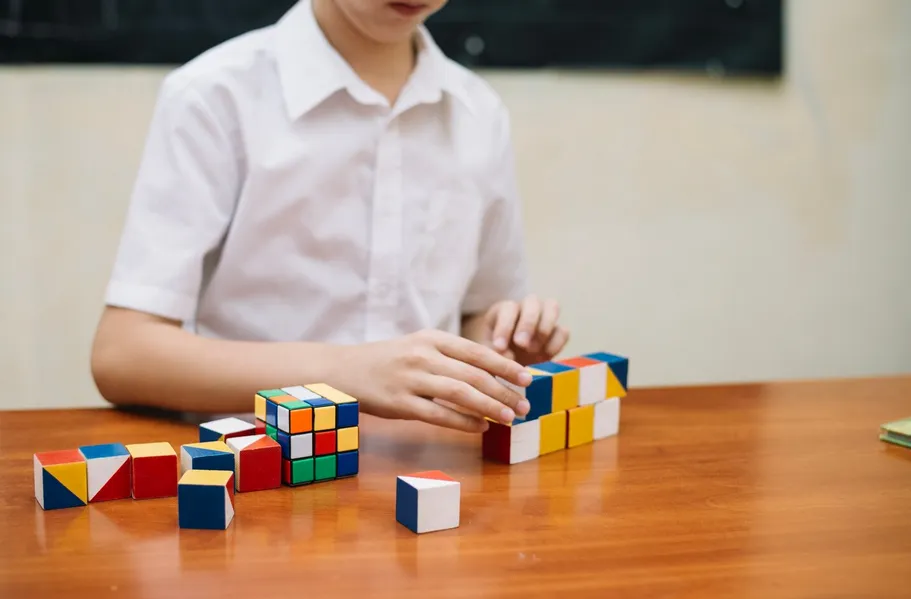
Many parents confuse Math Olympiad with standard school tuition. While school math focuses on the MOE syllabus and standard problem-solving techniques, Math Olympiad focuses on creative thinking, pattern recognition, and non-routine problems. It requires a high level of intellectual flexibility. The questions are designed to test a student’s ingenuity rather than their ability to memorise formulas.
Key Competitions
Singapore hosts several prestigious competitions that serve as benchmarks for high-ability students. The National Mathematical Olympiad of Singapore (NMOS) is organised by NUS High School. The Asia Pacific Mathematical Olympiad for Primary Schools (APMOPS) is organised by Hwa Chong Institution.
Other notable competitions include the Singapore and Asian Schools Math Olympiad (SASMO). Participating in these competitions gives students exposure to high-level problems and allows them to benchmark their skills against the best peers in the nation.
When To Start
Timing is crucial for Math Olympiad training. While it is never too early to encourage logical thinking, formal training usually yields the best results when started in Primary 2 or Primary 3. Starting at this age allows the student to build a “mathematical stamina” without the pressure of the PSLE looming over them. It gives them two to three years to develop their problem-solving toolkit before the major competitions in Primary 5 and 6.
Benefits Beyond Competitions
The benefits of Math Olympiad training extend far beyond medals and certificates. The training trains the brain to think critically and approach problems from multiple angles. This superior problem-solving ability often makes standard PSLE math questions seem easier by comparison. Students trained in Olympiad math are generally faster and more accurate because they have developed shortcuts and deeper insights into number theory and geometry.
Identifying And Bridging Learning Gaps
Signs Of A Weak Foundation
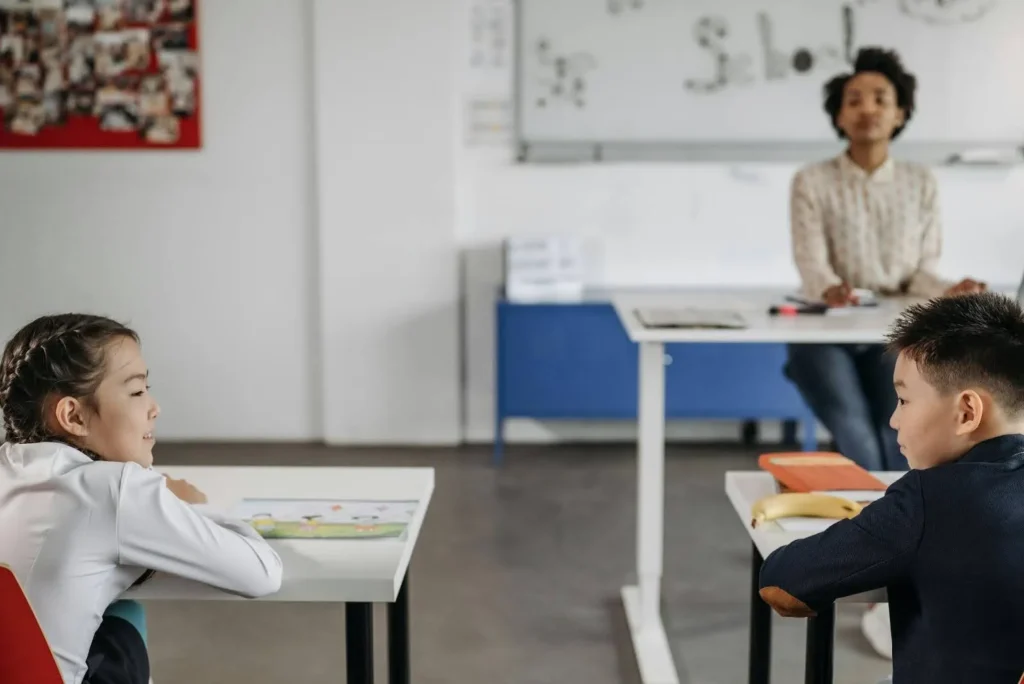
It is vital to spot signs of struggle early. If a child in Primary 4 is still relying on finger counting for simple addition, it indicates a gap in their number sense. Other signs include an inability to visualise word problems, a consistent fear of “problem sums,” or getting lost when a question is phrased slightly differently from what they have practised. These are not just careless mistakes; they are symptoms of a shaky foundation.
The Role Of Diagnostic Assessment
Before you can fix a problem, you must identify it. This is where diagnostic assessment comes in. It is not enough to say a student is “bad at math.” You need to know if the issue is with calculation, comprehension of the question, or a lack of conceptual understanding.
For example, a student might get a geometry question wrong not because they don’t know geometry, but because they made a calculation error. A diagnostic approach isolates the specific learning gap so it can be targeted effectively.
Mastery Over Speed
A common mistake parents make is pushing for speed before mastery. In the rush to finish assessment books, students often skim over concepts they do not fully understand. To bridge gaps, you must slow down. It is better for a child to solve five questions and fully understand the “why” and “how,” than to rush through fifty questions using a memorised method they don’t comprehend. Mastery ensures that the knowledge is retained and can be built upon in higher levels.
The Role Of Professional Math Tuition
Enrichment Versus Remedial
Math tuition in Singapore generally falls into two categories: enrichment and remedial. Remedial tuition is designed to help students who are falling behind to catch up to their peers and grasp the core syllabus.
Enrichment tuition, on the other hand, is for students who are already doing well but want to be challenged further, perhaps through Math Olympiad training or advanced problem-solving strategies. Understanding which type your child needs is the first step in selecting the right provider.
Small Group Versus One To One
The setting of the tuition matters. Large classes often replicate the school environment, where a quiet student might get lost. Small group tuition offers a balance of peer learning and individual attention. It allows the tutor to spot misconceptions immediately. One-to-one tuition provides the most personalised attention, allowing the curriculum to be entirely adapted to the student’s specific pace and learning style.
How Tutify Helps
At Tutify, we specialise in bridging the gap between potential and performance. We understand that every child learns differently. Our approach is not one-size-fits-all. We combine the rigour of the Singapore Math syllabus with engaging, personalised instruction.
Whether your child needs help grasping the basics of the CPA approach or requires advanced coaching for the National Math Olympiad of Singapore, our experienced tutors provide the expert guidance needed. We focus on building confidence just as much as competence, ensuring your child walks into their exams ready to succeed.
Conclusion On How To Develop Math Skills In Early Childhood
Developing math skills is a long-term process that blends school learning, home reinforcement, and specialised guidance. From mastering the CPA approach to challenging the mind with Math Olympiad problems, the goal is to build confidence and logical reasoning.
In the high-stakes environment of Singapore’s education system, having a robust strategy for math development is essential for your child’s success in the PSLE and beyond. By focusing on conceptual understanding and strategic practice, you can turn mathematics from a source of anxiety into a subject of strength.
If you are looking for expert guidance to boost your child’s mathematical ability or prepare them for competitions, contact Tutify today.
Visit Tutify to get started on your child’s journey.
Frequently Asked Questions About Developing Math Skills
How To Prepare My Child For Primary 1 Math In Singapore?
To prepare for Primary 1, focus on building strong number sense. Ensure your child is comfortable with number bonds (numbers that make up other numbers, like 2 and 3 make 5). Practice counting to 100 and simple addition and subtraction within 20. It is also beneficial to ensure they understand the concepts of “more than” and “less than” to prepare for comparison questions.
What Is The Difference Between Singapore Math And Traditional Math?
The main difference lies in the depth of understanding. Traditional math often relies on spiral learning (touching on topics briefly and repeatedly) and rote memorisation of procedures. Singapore Math focuses on mastery. It uses the Concrete-Pictorial-Abstract (CPA) approach to ensure students understand the concepts deeply before moving on. It emphasises problem-solving and model drawing over abstract equation solving in the early years.
When Is The Best Time To Start Math Olympiad Training?
While exposure to logical puzzles can start in Primary 1, formal Math Olympiad training is most effective starting from Primary 2 or Primary 3. This timing gives students enough runway to develop creative problem-solving skills and “mathematical stamina” before they reach the age for major competitions like NMOS and APMOPS in Primary 5 and 6.
How Can I Improve My Child’s Problem-Solving Skills For PSLE?
To improve problem-solving for the PSLE, encourage the use of heuristics and bar modelling. Instead of just focusing on getting the correct answer, focus on the process. Ask your child to explain why they chose a specific method. Practice identifying which strategy (e.g., Working Backwards, Constant Difference) applies to a question type. Consistent practice with challenging “non-routine” questions is key.
Is Math Tuition Necessary For Primary School Students In Singapore?
Math tuition is not mandatory, but it is highly beneficial in the Singapore context. Given the challenging nature of the syllabus, tuition helps bridge learning gaps for struggling students, preventing them from falling behind. For high-ability students, tuition provides necessary extension and challenge, such as Olympiad training, which school teachers may not have the time to cover in depth.
What Are The Benefits Of The CPA Approach?
The Concrete-Pictorial-Abstract (CPA) approach is beneficial because it aligns with how children naturally learn. By starting with physical objects (Concrete) and moving to diagrams (Pictorial) before numbers (Abstract), it removes the fear of abstract symbols. It ensures students understand the “why” behind the math, reducing anxiety and preventing rote memorisation failure when they face complex, unfamiliar questions in upper primary.