Primary mathematics in Singapore does more than prepare your child for the PSLE; it builds a strong foundation for crucial life skills. This article explores how mastering concepts like problem-solving, analytical thinking, and financial literacy through the Singapore math curriculum equips your child for future success.
We’ll break down the practical, real-world benefits of a solid math education, from everyday decision-making to long-term financial planning, and explain why these skills are vital in today’s world.
What is the Goal of Primary Mathematics Education?
For many parents, the immediate goal of primary mathematics is clear: to achieve a good grade in the Primary School Leaving Examination (PSLE). While this is an important milestone, the Ministry of Education (MOE) curriculum has a much broader and more profound objective. The goal is not to create human calculators who can perform rapid computations by memory. Instead, the focus is on developing students into adaptable and effective problem-solvers.
The Singaporean mathematics framework is built around a central pentagon with “Mathematical Problem Solving” at its core. This core is supported by five interconnected components: Skills, Concepts, Processes, Metacognition, and Attitudes.
This structure tells us that the curriculum’s primary aim is to teach children how to think, not just what to think. It prioritises deep conceptual understanding over rote learning and surface-level memorisation.
A key methodology used to achieve this is the Concrete-Pictorial-Abstract (CPA) approach. This three-stage learning process ensures that mathematical concepts are introduced in a tangible and intuitive way.
- Concrete Stage: This is the “doing” phase. Students engage with physical objects to understand a concept. For example, when learning about division, they might be given 12 blocks and asked to share them equally among 4 friends. They physically move the blocks into four groups of three, internalising the concept of division through action.
- Pictorial Stage: This is the “seeing” phase. Once a child understands the concept with physical objects, they move on to representing it with pictures. They might be asked to draw circles or squares to represent the 12 blocks and then circle them into four equal groups. This stage acts as a crucial bridge between the physical world and abstract symbols. The famous “model drawing” technique is a key part of this stage.
- Abstract Stage: This is the “symbolic” phase. Only after a child has a firm grasp of the concept through concrete and pictorial representations are they introduced to the abstract numbers and symbols. In our example, they would now learn to write the equation: 12 ÷ 4 = 3.
By following this CPA approach, the curriculum ensures that students truly understand the ‘why’ behind the mathematical operations, transforming math from a set of rules to be memorised into a logical system to be understood. This deep understanding is the bedrock upon which essential life skills are built.
6 Core Life Skills Developed Through Primary Math
The true value of a strong mathematical education reveals itself not in the exam hall, but in the countless decisions and challenges of everyday life. The skills honed in the primary math classroom are directly transferable to real-world situations, empowering your child with the cognitive tools they need to succeed long after they leave school.
1. Developing Strong Problem-Solving Abilities
At its heart, mathematics is the science of solving problems. The Singapore curriculum intentionally uses word problems (or story sums) to train students in the art of deconstruction and strategic thinking. These problems are not just about finding a numerical answer; they are exercises in understanding a situation, identifying the core question, and devising a logical plan to find a solution.
This process involves several key steps that mirror real-life problem-solving:
- Understanding the Problem: Children are taught to read a problem carefully, identify the knowns and unknowns, and understand what is being asked. This is the foundational skill of situational analysis.
- Devising a Plan: This is where mathematical heuristics come into play. Heuristics are essentially mental shortcuts or strategies used to solve problems. The Singapore curriculum explicitly teaches various heuristics, such as:
- Drawing a Model: Using bar models to visually represent quantities and their relationships. This helps children see the structure of a problem and is particularly useful for part-whole, comparison, and fraction problems.
- Looking for a Pattern: Identifying repeating sequences in numbers or shapes to predict what comes next. This encourages logical deduction.
- Working Backwards: Starting from the end result to find the initial value. This is useful in problems where the final state is known.
- Making a Systematic List: Organising information in a table or list to ensure all possibilities are considered.
- Carrying Out the Plan: This is the execution phase where calculations are performed.
- Checking the Answer: Students are encouraged to review their work, check if the answer makes sense in the context of the problem, and ensure the calculations are accurate.
This structured approach translates directly to life. When faced with a complex task, like planning a school project or even organising a family holiday, a child trained in these skills will instinctively break the task down, identify the necessary steps, execute them logically, and review the outcome. They learn not to be intimidated by complexity, but to approach it with a clear, strategic framework.
2. Enhancing Analytical and Logical Reasoning
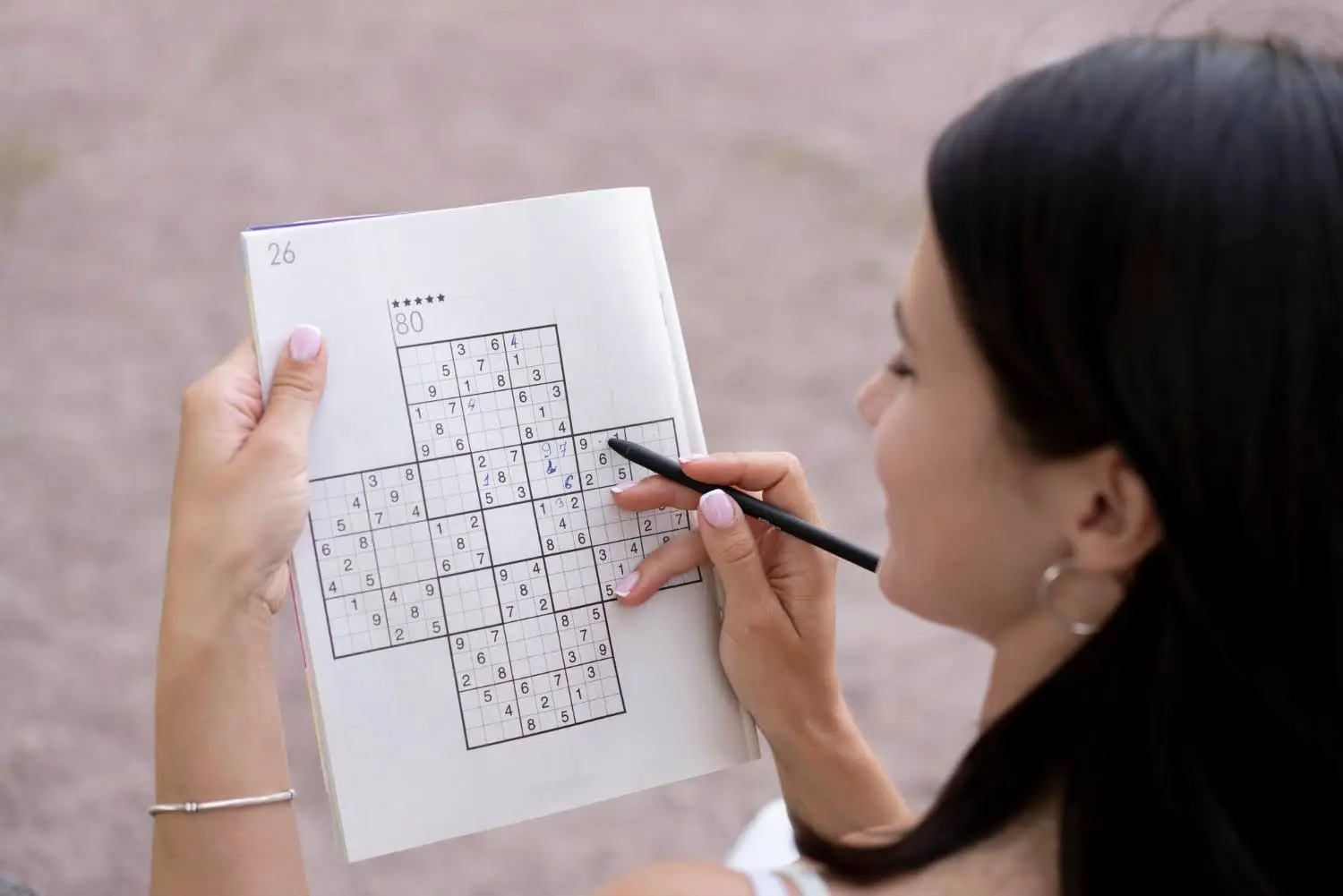
Analytical and logical reasoning is the ability to examine information, identify the relationships between different parts, and draw sensible conclusions. Primary math is an excellent training ground for this skill set.
Topics like sorting objects based on properties (shape, size, colour), identifying patterns in number sequences, and interpreting data from bar graphs and pie charts are all designed to hone analytical abilities. When a child looks at a graph showing their classmates’ favourite fruits, they are not just reading numbers. They are taught to analyse the data to answer questions like, “Which fruit is most popular?” (finding the maximum), “How many more students like apples than oranges?” (comparison and subtraction), and “What is the total number of students surveyed?” (aggregation and addition).
This process trains the brain to:
- Extract Key Information: Sifting through data to find what is relevant to the question at hand.
- Identify Relationships: Understanding concepts of cause and effect, correlation, and comparison.
- Formulate Logical Conclusions: Making evidence-based judgements rather than guessing or relying on emotion.
In adult life, this skill is indispensable. It is used when comparing different mobile phone plans to find the best value, understanding a news report that uses statistics, evaluating the pros and cons of a major purchase, or even making a logical argument in a discussion. A child who develops strong analytical reasoning through mathematics is better equipped to make informed and rational decisions throughout their life.
3. Building a Foundation for Financial Literacy
Perhaps one of the most direct and practical life skills derived from primary math is financial literacy. In a country like Singapore, where sound financial planning is highly valued, providing children with a strong foundation in this area is crucial. The primary math curriculum systematically introduces the concepts that form the building blocks of money management.
- Core Operations with Money: From Primary 1 and 2, children learn to recognise currency and perform basic addition and subtraction with dollars and cents. This translates directly to understanding a bill at a food court, calculating change, and managing their own pocket money.
- Decimals and Percentages: As they progress, students work with decimals, which is the language of money. They learn about percentages, a concept that is everywhere in the real world. Understanding that “50% off” means half price, or calculating the 7% Goods and Services Tax (GST) on a purchase, are essential skills for any consumer. This knowledge empowers them to understand discounts during the Great Singapore Sale and make smarter purchasing decisions.
- Budgeting and Saving: The skills of addition and subtraction are the core of budgeting. A child can be taught to track their weekly allowance (income) and their spending on snacks or toys (expenses) to see where their money goes. This simple exercise introduces the fundamental concept of living within one’s means.
- Value for Money: Multiplication and division are used to determine the best value. For example, when shopping at a supermarket, a child can be taught to calculate the unit price (e.g., cost per 100g) of two different-sized boxes of cereal to see which one is truly cheaper. This fosters a mindset of critical consumerism rather than just looking at the sticker price.
By mastering these mathematical concepts in a tangible context like money, children gain confidence in handling financial matters from a young age. This early exposure demystifies finance and lays a healthy foundation for saving, investing, and avoiding debt in their adult years.
4. Improving Time Management and Measurement Skills
Time and measurement are fundamental concepts that govern our daily lives, and primary mathematics provides the formal language to understand and control them.
Learning to tell time on both analogue and digital clocks is just the beginning. The curriculum focuses on calculating time duration, a skill essential for planning any schedule. A child learns to figure out how much time they have for homework before their piano lesson, or how long the bus journey will take to get to their grandmother’s house.
This ability to manipulate time as a calculable resource is the first step towards effective time management. It teaches them to plan their day, allocate time for different activities, and understand the importance of deadlines.
Similarly, measurement of length (metres, centimetres), mass (kilograms, grams), and volume (litres, millilitres) has direct, practical applications.
- In the Kitchen: Following a recipe requires precise measurement of ingredients. A child helping to bake a cake learns the practical importance of understanding grams and millilitres.
- For DIY Projects: Any simple craft or DIY project involves measuring materials accurately.
- Understanding the World: Concepts of distance (kilometres) help them make sense of maps and travel, while understanding weight helps them in activities like grocery shopping.
These skills remove guesswork from daily tasks and replace it with precision. A child who is comfortable with time and measurement is better able to organise their tasks, follow instructions, and interact with the physical world in a competent and confident manner.
5. Fostering Precision and Attention to Detail
Mathematics is a discipline that demands accuracy. In a math problem, there is little room for error; a misplaced decimal point or a single miscalculation can lead to a completely wrong answer. This unforgiving nature of the subject is, in fact, an excellent training tool for developing precision and a keen eye for detail.
Students are constantly taught the importance of writing their work neatly, showing their steps clearly, and, most importantly, checking their answers. The act of reviewing one’s own work is a critical habit. It trains a child to be self-critical, to hunt for their own “careless mistakes,” and to take responsibility for the accuracy of their output.
This habit of meticulousness extends far beyond the math worksheet. It cultivates a mindset of quality and thoroughness that is valuable in all areas of life.
- In Academics: It helps in proofreading an English essay, checking the accuracy of a science experiment’s results, or ensuring a history project meets all the required criteria.
- In Life: It translates into following instructions carefully when assembling a piece of furniture, double-checking travel details before a trip, or being a reliable person who can be trusted with important tasks.
In a world filled with information and distractions, the ability to focus, pay attention to the small details, and ensure work is done correctly is a highly sought-after skill. The rigorous practice in primary math helps to hardwire this quality into a child’s character.
6. Cultivating Abstract Thinking
One of the most significant cognitive leaps a child makes in their mathematical journey is the move from concrete understanding to abstract thought. The CPA approach is designed specifically to facilitate this transition. When a child moves from counting physical blocks (concrete) to drawing squares (pictorial) and finally to using the numeral ‘5’ (abstract), their brain is learning to work with symbols and concepts that do not have a physical form.
This ability is the gateway to higher-order thinking. Early algebra, where a letter like ‘x’ is used to represent an unknown number, is a perfect example of abstract reasoning. The child must understand that ‘x’ is not just a letter, but a placeholder for a value that can be found by manipulating other abstract symbols according to a set of logical rules.
Why is this important? Because our world is governed by abstract systems. Scientific laws, economic principles, computer code, and legal frameworks are all abstract systems that require this kind of thinking to understand and navigate. A child who develops the ability to think abstractly is better prepared for:
- Advanced STEM Subjects: Physics, chemistry, and higher mathematics rely heavily on understanding abstract models and formulas.
- Problem-Solving in Technology: Computer programming is entirely based on manipulating abstract variables and logical structures.
- Understanding Complex Systems: Grasping how an economy works or how a government is structured requires the ability to think about interconnected, non-physical concepts.
Primary math is where the first, crucial steps on this path to abstract reasoning are taken.
How Specialised Tuition Enhances These Life Skills

The Singapore school system provides a robust and well-structured mathematics curriculum. However, in a class of up to 40 students, it is inevitable that some children will need more personalised support to fully grasp the concepts and build the life skills associated with them. This is where specialised mathematics tuition plays a vital role.
Effective tuition is not simply about drilling for exams. It is about reinforcing the foundational understanding that makes these life skills possible. An expert tutor can:
- Identify and Address Gaps: A skilled tutor can quickly diagnose the specific areas where a child is struggling. Perhaps they have not fully mastered the “Pictorial” stage and are being rushed into the “Abstract.” A tutor can provide targeted exercises with models and drawings to solidify this understanding.
- Provide Personalised Explanations: If a child does not understand a concept explained one way, a tutor can present it in several different ways until it clicks. This personalised approach ensures that the student truly comprehends the material, rather than just memorising a procedure.
- Build Confidence: Mathematical anxiety is real. A child who struggles may start to believe they are “bad at math.” In a supportive, small-group setting, a tutor can help them achieve small victories, building their confidence step by step. A confident student is more willing to tackle difficult problems and apply their skills in new situations.
- Make Math Relatable: A great tutor connects mathematical concepts to the child’s interests and everyday life, reinforcing the very lessons this article discusses. They can use examples from sports, video games, or shopping to make math engaging and relevant.
Ultimately, specialised tuition acts as a catalyst, strengthening the connection between the school curriculum and the development of real-world competencies. It ensures that the goal of the MOE framework, to create confident problem-solvers, is fully realised for every child.
Conclusion On How Primary Math Helps In Building Life Skills
Primary math, as taught in the Singapore curriculum, is a powerful tool for developing essential life skills that extend far beyond the PSLE. It systematically builds your child’s ability to solve problems, think analytically, and reason logically. Key concepts lay a crucial foundation for practical abilities like financial literacy, time management, and attention to detail.
By mastering these mathematical fundamentals, your child gains the confidence and competence to navigate complex, real-world challenges effectively. A strong start in math is truly a head start in life. To ensure your child builds this vital foundation, explore how specialised instruction can make a difference.
We encourage you to contact us to learn more about our programmes at Tutify.
Frequently Asked Questions About How Math Helps Building Life Skills
How Does Math Relate to Real-Life Skills?
Math is the foundation for many practical skills. It helps in budgeting and managing money (financial literacy), planning schedules (time management), making informed choices by comparing options (analytical skills), and solving everyday problems logically. From calculating a discount at a store to figuring out the best route for travel, math is constantly used in daily decision-making.
Why Is Primary Math So Important?
Primary math is crucial because it builds the fundamental cognitive abilities for all future learning. It develops a child’s brain to think logically, analytically, and abstractly, skills which are essential not only for higher-level math and science but for all subjects and life in general. It sets the stage for a child to become a competent and confident problem-solver.
What Are the 5 Life Skills We Can Learn From Mathematics?
Five key life skills learned from mathematics are: 1. Critical Problem-Solving, which involves breaking down complex issues into manageable steps; 2. Analytical and Logical Reasoning, used for making informed decisions; 3. Financial Literacy, for managing money effectively; 4. Attention to Detail, ensuring accuracy in tasks; and 5. Time Management, for planning and organising daily activities.
How Do You Explain the Importance of Math to a Child?
Explain it using real-world examples they can understand. Connect it to their interests. For instance, show them how math is used when buying their favourite snack (budgeting), dividing a pizza among friends (fractions), keeping score in a game (addition), or figuring out how much time they have to play before dinner (time calculation). Making it relatable shows them that math is a tool for their own life, not just a school subject.
How Does Math Improve Critical Thinking?
Math problems, especially word problems, require children to go beyond simple calculation. They must analyse information, identify the underlying question, devise a strategy from several possibilities, and execute a multi-step plan to reach a solution. This entire process is an exercise in critical thinking that trains the brain to approach all types of challenges in a structured and logical manner.
What Skills Does PSLE Math Test?
The PSLE Math exam tests more than just calculation. It assesses a child’s ability to understand and apply mathematical concepts to various unfamiliar scenarios. It evaluates their logical reasoning and, crucially, their problem-solving skills using established heuristics taught in the Singapore curriculum. It is designed to be a test of their mathematical thinking and adaptability, not just their memory of formulas.