

Confused by the “Double Math” dilemma? You are not alone. In Singapore’s O-Level curriculum, Elementary Mathematics (E Math) builds practical, real-world numeracy, while Additional Mathematics (A Math) focuses on abstract algebra and calculus needed for higher education.
E Math is compulsory; A Math is an elective for students strong in reasoning. This guide breaks down the 2025 syllabus differences (4052 vs. 4049), difficulty levels, and why your child’s choice impacts their JC and Polytechnic pathways.
Read on to make the right choice for your child’s future. Both of these maths help develop logical and practical thinking.
What Actually Are E Math and A Math?
When your child enters Secondary 3, the academic landscape shifts dramatically. The streaming process often forces parents and students to make difficult decisions regarding subject combinations. The most common question we encounter at Tutify is regarding the necessity and nature of the two mathematics subjects.
To make an informed decision, you must first understand that these are not just “easy math” and “hard math.” They are fundamentally different disciplines with distinct goals.
Defining Elementary Mathematics (E Math)
Elementary Mathematics, often referred to as E Math, is the foundational bedrock of the Singapore mathematics curriculum. It follows the Singapore-Cambridge GCE O-Level Syllabus 4052.
Think of E Math as “Math for Life.” The primary objective of this subject is to equip students with the necessary mathematical skills to navigate daily life and the modern world effectively. It deals with concepts that are tangible and concrete. When a student calculates the interest on a bank loan, estimates the floor area for renovation, or analyses a graph in a newspaper to spot a trend, they are using E Math skills.
Because these skills are considered essential for every functioning adult, E Math is a compulsory subject for almost all secondary students in Singapore. It tests the ability to apply standard mathematical tools to real-world situations.
Defining Additional Mathematics (A Math)
Additional Mathematics, or A Math, is the specialisation track. It follows the Singapore-Cambridge GCE O-Level Syllabus 4049.
If E Math is about the “now,” A Math is about the “future.” This subject is designed to prepare students for A-Level H2 Mathematics and tertiary courses in Engineering, Sciences, and Computing. A Math introduces abstract mathematical concepts that you cannot always “see” in the physical world. It requires a higher level of algebraic manipulation and mathematical reasoning.
Unlike E Math, A Math is not compulsory. It is usually offered to students who have demonstrated a strong aptitude for mathematics in Lower Secondary (usually the top 60% to 70% of the cohort). It is less about calculating a final bill and more about modelling complex changes and proving mathematical truths.
Key Topics in E Math (4052)
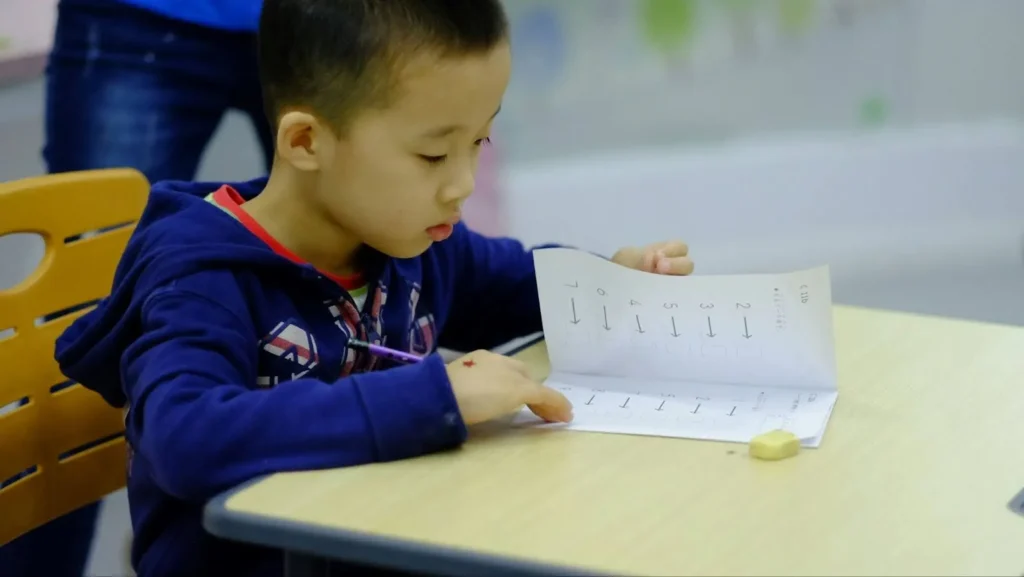
The E Math syllabus is broad. It covers a wide range of topics but generally stays at a foundational level. The curriculum is divided into three main strands:
1. Number and Algebra
This forms the bulk of the syllabus. Students deal with standard arithmetic, laws of indices, and standard algebraic equations. However, the unique aspect of E Math is “Financial Mathematics.” Students learn about simple and compound interest, hire purchase, currency exchange, taxation, and utility bills. This is highly practical but often trips students up because it requires precise reading of wordy questions.
2. Geometry and Measurement
This involves the study of shapes, lines, and angles in both 2-dimensional and 3-dimensional spaces. Students use Pythagoras’ theorem, trigonometry (TOA-CAH-SOH), and mensuration formulas to calculate volume and surface area. They also study coordinate geometry and vectors at a basic level.
3. Statistics and Probability
In the modern data-driven world, this strand is crucial. Students learn to interpret dot diagrams, histograms, and cumulative frequency curves. They calculate mean, median, and mode, and assess the probability of events occurring.
The “Real-World” Curveball
The defining feature of the modern E Math paper is the “Problems in Real-World Contexts” (PRWC) section. These questions do not look like standard math equations. They are often long case studies involving floor plans, recipe ratios, or financial planning. Students must extract relevant data from text and diagrams to solve the problem. This tests reading comprehension as much as calculation.
Key Topics in A Math (4049)
The A Math syllabus is deeper and narrower. It assumes the student already knows E Math concepts and builds vertically upon them.
1. Advanced Algebra
Algebra is the language of A Math. Students move beyond simple equations to handle Polynomials, Partial Fractions, and Binomial Expansions. They deal with Surds (roots), Indices, and Logarithms. The ability to manipulate complex algebraic expressions quickly and accurately is the baseline requirement for this subject.
2. Geometry and Trigonometry
While E Math stops at basic trigonometry, A Math goes much further. Students learn the “Addition formulae” and “Double angle formulae.” They must prove trigonometric identities, a task that requires logical sequencing rather than just punching numbers into a calculator. Coordinate geometry is also more advanced, dealing with circles, tangents, and normals.
3. Calculus
This is the distinct differentiator. Differentiation and Integration are topics exclusive to A Math in the O-Level track. Calculus is the mathematical study of continuous change. Students learn to calculate rates of change, find maximum and minimum points on a curve, and calculate the area under a curve. This is the topic that usually causes the “Sec 3 Shock” because it is a completely new concept with no parallel in Lower Secondary math.
The “Systematic” Advantage
While the topics sound intimidating, A Math questions are often more structured than E Math. There are fewer “real-world” curveballs. If a student masters the method for solving a differential equation, the question format in the exam remains relatively predictable.
Difficulty Level: Is A Math Actually Harder?

This is the most debated topic among Singaporean parents. The intuitive answer is “Yes, A Math is harder.” However, you can develop good study habits to help your child grow and understand these subjects.
The Conceptual Learning Curve
In terms of learning the material, A Math is undeniably harder.
- Abstract Nature: In E Math, you can visualise calculating the area of a field. In A Math, you are asked to find the stationary point of a cubic curve. It requires a leap of imagination and abstract thinking.
- The Sec 3 Shock: Many students who scored A1s in Sec 2 Math find themselves failing their first A Math test in Sec 3. This is normal. The jump in algebraic complexity is steep, and it takes time for the brain to adapt to the rigour of Calculus.
The “Bell Curve” and Scoring Ease
In terms of scoring a distinction, E Math can actually be more difficult.
- The Steep Bell Curve: Because E Math is conceptually easier, the majority of the cohort finds the questions manageable. This pushes the grade boundaries up significantly. To score an A1 in E Math at the O-Levels, a student often needs to score above 90% (estimates vary, but the bar is high).
- Precision vs. Method: E Math is a test of precision. One careless sign error or rounding mistake can cost you the A1.
- The A Math Safety Net: Conversely, A Math is technically difficult, which lowers the bell curve. A student might secure an A1 with a score of 75-80%. Furthermore, A Math marking schemes are heavy on “Method Marks” (M-marks). Even if the final answer is wrong due to a calculation error, the student can still secure the majority of the marks if their algebraic steps and logic were correct.
In summary: A Math is harder to learn, but E Math is often harder to score a perfect distinction in due to the lack of margin for error.
Why Take A Math? Future Pathways and Prerequisites
When helping your child choose their subject combination, you are not just looking at the next two years; you are looking at the next six. The choice to take or drop A Math has significant implications for post-secondary education.
The Junior College (JC) Route
If your child aims to enter a Junior College, A Math is heavily strategic.
1. The H2 Math Prerequisite
In JC, the most popular subject combinations in the Science stream (such as PCME: Physics, Chemistry, Math, Economics) require H2 Mathematics. H2 Math is essentially an advanced continuation of A Math.
- Most JCs require a pass (often a C6, but preferably a B3 or better) in O-Level A Math to offer H2 Math.
- Can you take H2 Math without A Math? Technically, some JCs allow students to take H2 Math without O-Level A Math, but they must pass a rigorous “Bridging Module” at the start of JC1.
- The Reality: We strongly advise against relying on the bridging module. The JC curriculum is incredibly fast-paced (a two-year syllabus compressed into 1.5 years). Trying to learn two years of O-Level Calculus while simultaneously handling H2 Math content is a recipe for severe academic stress and potential retention.
2. H1 Math
If a student does not have A Math, they are usually restricted to H1 Mathematics. H1 Math is statistically focused and has less calculus. While this is fine for Arts stream students or those aiming for Law or Business, it closes the door to Engineering and many Science degrees at university.
The Polytechnic Route
The relevance of A Math extends to the Polytechnic pathway as well.
1. Engineering and Tech Courses
Diplomas in Engineering (Aerospace, Mechanical, Electrical), Data Science, Artificial Intelligence, and Cybersecurity are math-intensive. These courses assume a fluency in algebra and calculus. Students entering these courses without A Math often struggle significantly in their first year as they try to play catch-up.
2. Module Exemptions
Students who score well in O-Level A Math are often granted exemptions from first-year “Engineering Mathematics” modules in Polytechnic. This lightens their GPA load, allowing them to focus on their core technical modules.
How A Math and E Math Affect O-Level Aggregates
Understanding how the “L1R5” (for JC) and “ELR2B2” (for Poly) are calculated is vital for strategic planning.
Calculating L1R5 (For JC Admission)
To enter a Junior College, a student’s score is calculated based on:
- L1: First Language (English)
- R5: 5 Relevant Subjects
One of the R5 subjects must be a Mathematics subject. However, the system allows for flexibility regarding the other relevant subjects.
- The “Double Math” Hack: You can use one math subject (e.g., E Math) to fulfil the mandatory “Mathematics” slot. You can then use the second math subject (A Math) to fulfil one of the “Best Relevant Subject” slots.
- Why this matters: Students who are strong in Math effectively get to “double dip.” If they score A1 in both E Math and A Math, they have already secured 2 points for their aggregate with subjects that rely on similar skill sets. This is often easier than scoring an A1 in a Humanities subject, which is more subjective.
Calculating ELR2B2 (For Poly Admission)
For Polytechnic courses, specifically clearly related to Science and Technology (Aggregate Type C), the calculation is:
- E: English
- L: Mathematics (Elementary or Additional)
- R2: 2 Relevant Subjects
- B2: 2 Best Other Subjects
Here, A Math serves as a fantastic safety net. The requirement is simply “Mathematics.” If a student has a bad day during the E Math paper and scores a B3, but scores an A1 in A Math, the system will automatically use the A Math grade for the “L” component. Taking both subjects essentially gives your child two shots at securing a crucial grade for their polytechnic aggregate.
Should Your Child Drop A Math?

This is the question we hear most often around the mid-year examinations of Secondary 3. The initial grades come back, and they are often demoralising. Before you submit the drop form, consider the following.
Signs Your Child is Struggling (And Might Need to Drop)
- Weak Foundation: If your child is failing E Math as well, it indicates a fundamental issue with numeracy and algebraic logic. In this case, A Math might be a distraction that pulls resources away from passing the compulsory E Math.
- Consistent Failure Despite Support: If your child has had quality tuition and consistent practice for six months but still scores below 40% with no sign of conceptual understanding, the subject might not be a good fit.
- Stress Overload: If the struggle with A Math is causing severe anxiety that impacts other subjects, prioritising mental health and overall L1R5 might be the wiser choice.
When to Persevere
- The “New Topic” Shock: If the failure is due to Calculus or Trigonometry, do not drop yet. These are new skills. Like learning to ride a bike, it requires a period of falling before it clicks. Once it clicks, these topics become high-scoring areas.
- Passing E Math: If they are scoring B3 or A2 in E Math but failing A Math, the potential is there. They have the mathematical logic; they just lack the specific A Math technical skills. This is a fixable problem with the right guidance.
- STEM Aspirations: If your child wants to be an engineer, pilot, or data scientist, dropping A Math closes too many doors. It is better to scrape a C6 in A Math than to not have it at all.
- Sec 4 Prelims is the Indicator: We usually advise parents to wait until the Secondary 4 Preliminary Exams. If they are still failing then, you can consider dropping it before the O-Levels to save study time. But don’t drop it in Secondary 3.
Conclusion On A Math Vs E Math
In summary, the difference between A Math and E Math goes beyond difficulty. E Math is the essential toolkit for daily life, focusing on financial literacy, statistics, and practical geometry. A Math is the specialist toolkit for the sciences, focusing on algebra, calculus, and abstract reasoning.
While A Math is more conceptually challenging, it offers significant strategic advantages. It acts as a prerequisite for university-track H2 Math, provides a safety net for O-Level aggregates, and prepares students for high-demand STEM careers. The “Double Math” combination is a powerful tool for lowering L1R5 scores for students who can master the logic.
If your child is navigating the transition to Upper Secondary math or struggling to cope with the double workload, expert guidance makes the difference. Many students simply need the abstract concepts translated into understandable steps to unlock their potential. Contact us at Tutify to schedule a consultation with our specialist math tutors today.
Frequently Asked Questions About A Math And E Math
Is A Math or E Math Harder in Singapore?
A Math is generally considered conceptually harder because it involves abstract topics like Calculus and advanced trigonometry that require higher-order thinking. However, E Math is often harder to score a distinction (A1) in because the bell curve is very steep; it requires near-perfect accuracy, whereas A Math marking is more lenient on method marks.
Can I Take H2 Math Without A Math?
Technically, yes, some Junior Colleges allow students to take H2 Math without O-Level A Math, but it is conditional. You will typically be required to pass a qualifying test and attend an intensive “Bridging Module.” This is highly challenging, and students without the A Math foundation often struggle to keep up with the fast-paced H2 syllabus.
Do I Need A Math for Polytechnic Engineering Courses?
While not always strictly mandatory for admission (as long as you have E Math), A Math is highly recommended. Polytechnic Engineering and IT courses are math-intensive. Students with A Math background cope much better with the curriculum and may even receive exemptions from first-year Engineering Mathematics modules.
How Is L1R5 Calculated With A Math and E Math?
For the L1R5 aggregate (JC admission), you can use both subjects to your advantage. E Math can count as your mandatory Mathematics subject, while A Math can count as one of your “Best Relevant Subjects.” This allows strong math students to utilise two math grades to lower their overall aggregate score.
Is A Math Compulsory for O Levels?
No, A Math is not compulsory. It is an elective subject usually offered to students who have performed well in Mathematics at the Lower Secondary level. E Math (Elementary Mathematics), however, is compulsory for almost all secondary students.
What Is the Difference Between Math 4049 and 4052 Syllabus?
Syllabus 4052 (E Math) focuses on real-world application, including financial math, statistics, and basic geometry. Syllabus 4049 (A Math) focuses on algebraic manipulation and abstract concepts, including calculus (differentiation and integration), logarithms, and advanced trigonometry, serving as a foundation for higher-level studies.