

Math is much more than just numbers and equations; it’s a powerful tool for building your child’s logical reasoning and critical thinking. These skills are essential for success in Singapore’s competitive schools and for their future careers.
Math trains the brain to analyse problems, identify patterns, and follow a structured path to a solution. This article explains exactly how mathematics develops these vital logical skills and what you, as a parent, can do to support your child’s journey.
What is Logical Thinking and Why Does It Matter?
Logical thinking is the ability to reason clearly and systematically. It involves looking at a situation, breaking it down into smaller parts, identifying the connections between these parts, and using this information to solve a problem. It is the skill that allows us to move from a piece of information (a premise) to a sensible conclusion.
In the context of your child’s education in Singapore, logical thinking is not just a ‘good-to-have’ skill; it is fundamental. From primary school science to secondary school essays, the ability to think logically helps a student to structure their thoughts, make coherent arguments, and understand complex topics.
In the workplace, employers highly value individuals who can analyse issues, devise strategies, and make well-reasoned decisions. Strong logical thinking is a key ingredient for academic achievement and long-term career success.
Direct Link Between Mathematics and Logical Reasoning
Mathematics is, at its core, a language of logic and order. Every mathematical concept, from basic arithmetic to advanced calculus, is built upon a foundation of logical rules. You cannot solve a math problem through guesswork or opinion; you must follow a precise and logical sequence of steps to arrive at the correct answer.
This inherent structure makes mathematics one of the best subjects for training the brain in logical thought. As your child learns to solve math problems, they are not just learning formulas. They are learning how to:
- Analyse the given information.
- Identify the question that needs to be answered.
- Choose the right method or formula.
- Apply the method in a careful, step-by-step manner.
- Check their answer to ensure it is logical and correct.
This entire process is a direct exercise in logical reasoning. Consistently engaging in this type of thinking strengthens the neural pathways in the brain responsible for logical and structured thought, making it a transferable skill that can be applied to any other area of life.
5 Ways How Math Actively Develops Logical Thinking Skills

Mathematics is not a passive subject. It actively forces the brain to engage in different modes of logical thought. Through its various topics and problem types, it builds a complete toolkit for logical reasoning.
1. Encouraging a Systematic, Step-by-Step Approach
One of the first things a child learns in math is that order matters. You cannot get the right answer by doing things in a random sequence. This discipline builds a foundation for systematic thinking.
- Breaking Down Complex Problems: The Singapore Math curriculum is famous for its use of methods like model drawing for word problems. This technique teaches children to take a complex story problem and translate it into a simple, visual model. This act of deconstruction, breaking a large problem into smaller, manageable parts, is the very first step in any logical problem-solving process.
- Following a Logical Sequence: In topics like Algebra, a student must follow the correct order of operations (BODMAS/PEMDAS) to simplify an expression. In Geometry, proving a theorem requires a series of logical statements, where each step follows directly from the previous one. This reinforces the habit of structured, sequential thinking, which is invaluable for planning projects or writing reports later in life.
- Verifying Solutions: A crucial part of mathematics is checking one’s work. This isn’t just about avoiding careless mistakes; it’s about logically retracing your steps to confirm that the conclusion is valid. This process builds intellectual rigour and a healthy scepticism, encouraging a child not to accept an answer at face value but to prove its validity.
2. Building Pattern Recognition and Abstract Thinking
The world is full of patterns, and the ability to recognise them is a key aspect of intelligence and logical reasoning. Mathematics is fundamentally the study of patterns.
- Identifying Patterns in Numbers and Shapes: From recognising simple number sequences in Primary 1 to identifying complex functions in A-Math, the subject constantly trains students to look for underlying patterns. This ability is crucial for making predictions and logical deductions. For example, by recognising a pattern, a student can predict the next number in a sequence or determine the general rule for a set of data.
- Moving from Concrete to Abstract: Math teaches students to work with abstract ideas. A number like ‘5’ can represent five apples (concrete) or just the concept of ‘five’ (abstract). In algebra, a letter like ‘x’ can represent any unknown value. This ability to work with abstract symbols and ideas develops a child’s capacity to think beyond the immediate and tangible, which is a cornerstone of higher-order logical reasoning.
- Understanding Cause and Effect: Mathematical operations show clear cause-and-effect relationships. If you add a value to one side of an equation, you must logically do the same to the other side to maintain the balance. This helps children understand that actions have consequences and that variables are often dependent on one another, a critical concept in science, economics, and everyday decision-making.
3. Strengthening Deductive and Inductive Reasoning

These two types of reasoning are essential for advanced logical thought, and mathematics provides the perfect training ground for both.
- Deductive Reasoning in Mathematics: Deductive reasoning starts with a general rule or statement (a premise) and applies it to a specific case to reach a guaranteed conclusion. For example, if we know the general rule that “all rectangles have four right angles” (premise 1) and that “this shape is a rectangle” (premise 2), we can deduce with certainty that “this shape has four right angles” (conclusion). Geometry proofs are a classic exercise in pure deductive logic.
- Inductive Reasoning Through Exploration: Inductive reasoning works in the opposite direction. It involves observing specific examples and then forming a general conclusion or hypothesis. For instance, after observing that 3, 6, 9, and 12 are all divisible by 3, and noticing that the sum of their digits (3, 6, 9, and 1+2=3) is also divisible by 3, a student might form the general hypothesis that “a number is divisible by 3 if the sum of its digits is divisible by 3.” This encourages analytical observation and the formulation of logical theories.
Problem-Solving: The Ultimate Test of Logical Thinking
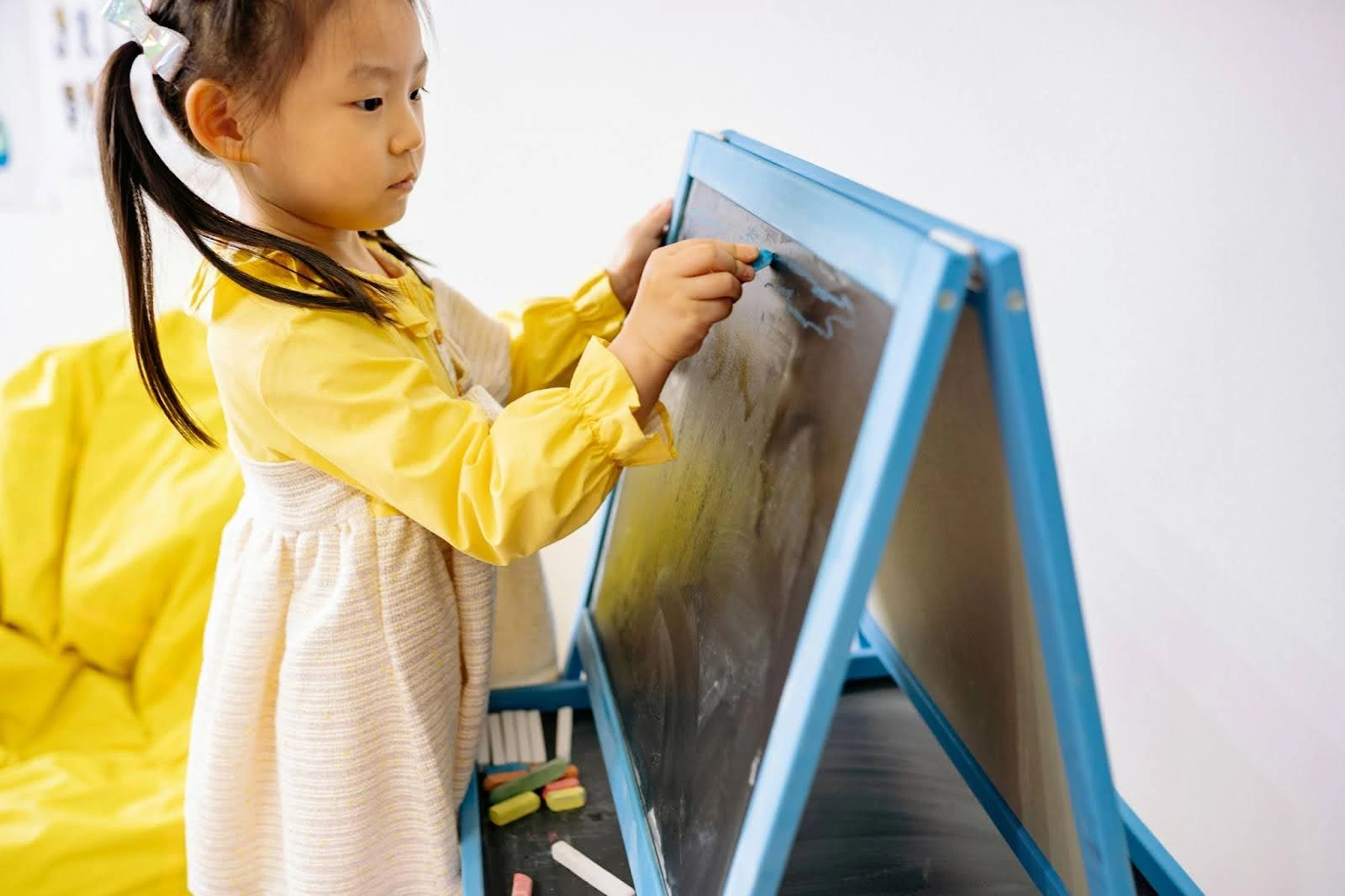
The main goal of mathematics education, particularly in the rigorous Singaporean system, is to create skilled and confident problem-solvers. This is where all the logical thinking skills come together and are put into practice.
4. The Role of Heuristics in the Singapore Math Curriculum
Heuristics are problem-solving strategies or mental shortcuts that help to guide a student’s thinking. They are a central part of the Singapore Math framework.
- What are Heuristics?: They are not rigid formulas but flexible logical tools. Common heuristics taught in schools include ‘Draw a Diagram’, ‘Look for a Pattern’, ‘Work Backwards’, ‘Make a Systematic List’, and ‘Guess and Check’.
- How Heuristics Build Logic: The power of heuristics lies in their application. For any given problem, a student must first analyse it to decide which heuristic is the most logical one to apply.
For example, for a problem involving relationships between different quantities, ‘Draw a Diagram’ might be logical. For a problem where the end state is known but the start is not, ‘Work Backwards’ is the logical choice. This decision-making process is a powerful, active exercise in critical thinking and strategic planning.
- Application in PSLE and O-Level Exams: The challenging, non-routine problems found in high-stakes exams like the PSLE and O-Levels are specifically designed to test these skills. They cannot be solved by simply memorising formulas. Students who succeed are those who can logically analyse the problem, select an appropriate heuristic, and apply it systematically.
5. Beyond the Classroom: Applying Math Logic to Real-Life Scenarios
The logical thinking skills developed through mathematics are extremely valuable outside of the classroom. They provide a framework for making sense of the world and navigating daily challenges.
- Financial Literacy: Understanding concepts like interest rates, budgeting, and investment returns all require the logical and analytical skills learned in math. Calculating the best mobile phone plan or figuring out a home loan requires you to compare variables and make a logical choice.
- Planning and Time Management: Breaking down a large school project or planning a family holiday involves the same logical sequencing skills used to solve a multi-step math problem. You need to identify all the necessary steps, put them in the correct order, and allocate resources (like time) efficiently.
- Making Informed Decisions: Everyday life is full of decisions. Should I take this route to work or that one? Which insurance plan offers the best value? The ability to evaluate evidence, compare pros and cons, and anticipate likely outcomes is a form of logical reasoning that is heavily strengthened by mathematical training.
How Parents Can Support the Development of Logical Thinking Through Math

As a parent, you play a crucial role in helping your child connect their math skills to logical thinking. Your encouragement and approach can make a significant difference.
Focus on the ‘Why’, Not Just the ‘How’
It is easy to focus only on whether the final answer is correct. However, to build logical thinking, the process is more important than the result.
- Encourage your child to explain their reasoning out loud. Instead of just asking, “What is the answer?”, ask questions like, “How did you get that answer?” or “Why did you decide to add those numbers instead of multiplying?”
- This act of explaining forces them to arrange their thoughts in a logical sequence. It helps them to understand their own thinking process and solidifies their learning. It also helps you identify any gaps in their logic that need to be addressed.
Use Puzzles, Games, and Real-World Examples
Make thinking logical a fun and regular part of family life.
- Logic puzzles, Sudoku, chess, and strategy board games are excellent ways to exercise the logical parts of the brain in a low-pressure environment.
- Involve your child in everyday problem-solving. When you are at the supermarket, ask them to calculate which box of cereal is better value for money. When planning a trip, ask them to help figure out the best route using a map and distance information. These small, practical applications show them that math and logic are useful skills for everyday life.
The Role Of Specialised Mathematics Tuition
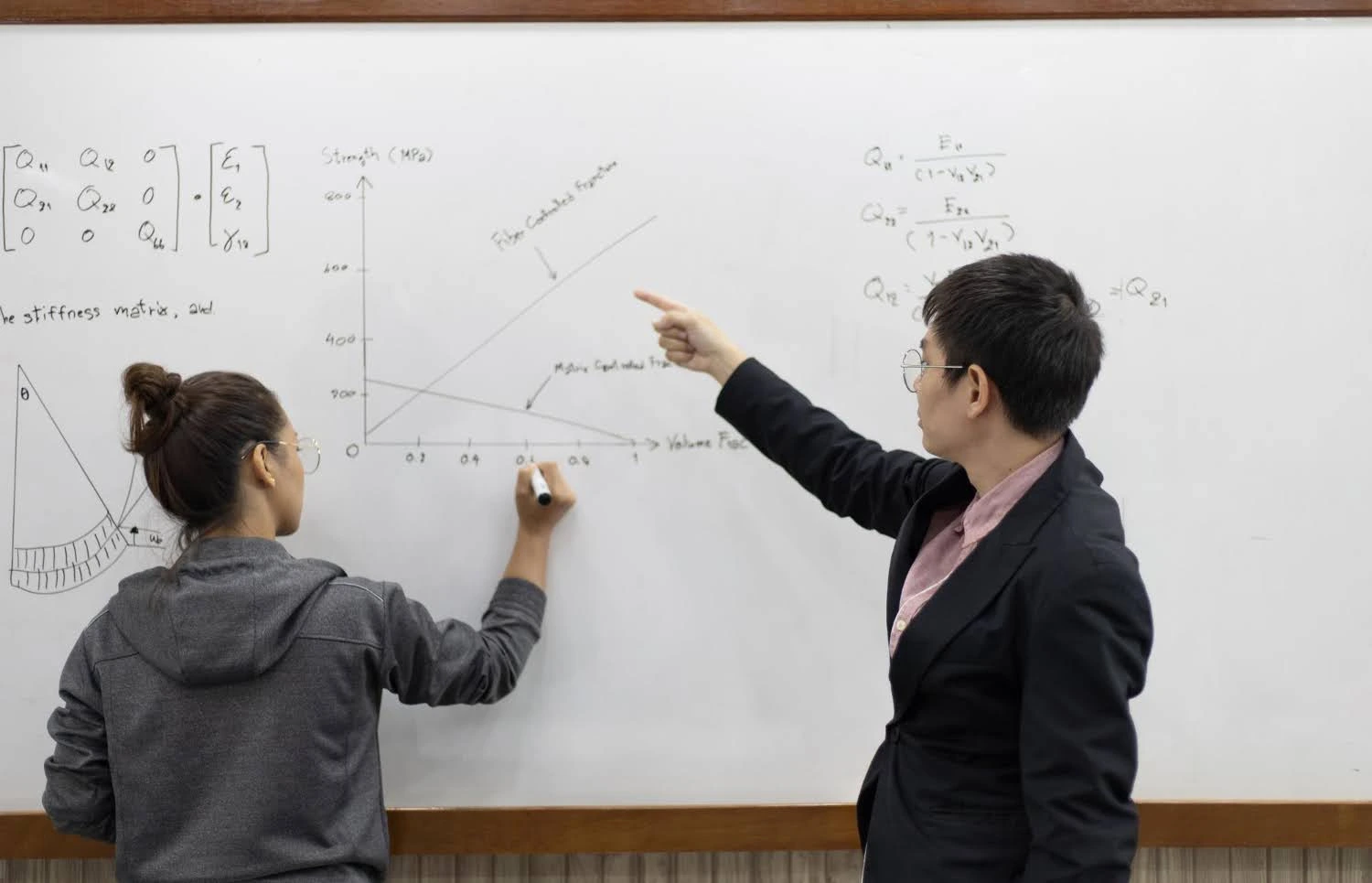
While parental support is vital, sometimes a more focused approach is needed to unlock a child’s full potential. This is where specialised math tuition can be highly effective.
- Targeting Weaknesses in Logic: A skilled and experienced tutor can quickly identify the specific point where a child’s logical process is breaking down. Is the student struggling to understand the question, choose the right strategy, or perform the calculations correctly? Specialised tuition can provide targeted exercises to strengthen that specific weakness.
- Building Confidence: A fear of making mistakes can often prevent a child from even trying to tackle a difficult problem. This ‘math anxiety’ can block their ability to think logically. A good tutor provides instruction in a patient and supportive environment, helping to build the confidence a child needs to approach complex problems with a clear mind.
- Advanced Heuristics Training: While schools teach heuristics, a specialised tutor can provide deeper and more intensive training. They can introduce a wider range of problem types and teach your child how to flexibly combine different strategies, preparing them for the most challenging questions in the PSLE and O-Level examinations.
Conclusion On The Importance of Math in Developing Logical Thinking
To summarise, the importance of math in developing logical thinking cannot be overstated. Mathematics provides a structured framework for honing skills in systematic reasoning, pattern recognition, and strategic problem-solving.
These abilities are crucial not only for excelling in the Singaporean education system, from the PSLE to the O-Levels, but also for navigating life’s complexities. By training the brain to think methodically and analytically, math equips your child with a versatile toolkit for future academic and career success.
To give your child the specialised support they need to build these essential skills, contact us today and see how the expert tutors at Tutify can make a difference.
Frequently Asked Questions About The Importance of Math in Developing Logical Thinking
How Does Mathematics Directly Help in Developing a Child’s Logical Thinking?
Mathematics helps by training the brain to follow a structured, step-by-step process. Every math problem requires a student to analyse information, identify a goal, choose a method, and follow a sequence of steps to find a solution. This process directly builds and reinforces the neural pathways for logical and systematic thought.
What is the Relationship Between Strong Math Skills and Good Problem-Solving Abilities?
Strong math skills and good problem-solving abilities are closely linked. Math, especially the Singapore Math curriculum, teaches heuristics, which are essentially problem-solving tools. By mastering math, a child learns how to break down complex problems, recognise patterns, and apply a range of strategies to find a solution, making them a more effective problem-solver in all areas of life.
Can My Child Develop Logical Thinking Skills Without Being Good at Math?
Yes, logical thinking can be developed through other activities like chess, coding, or debating. However, mathematics offers a uniquely structured and universal system for training logical thought. Since math is a compulsory core subject, strengthening a child’s mathematical ability is one of the most direct and effective ways to improve their logical reasoning skills for academic success.
Why is Logical Thinking So Important in the Singapore PSLE Math Exam?
The PSLE math exam is designed to test more than just memory. The most challenging questions are often non-routine problems that require students to apply their knowledge in new ways. Success in these sections depends heavily on strong logical thinking: the ability to understand the problem, choose the correct problem-solving heuristic, and execute a logical plan to find the answer.
Which Area of Mathematics is Considered Best for Improving Logic and Reasoning?
Different areas of math strengthen different aspects of logic. Geometry, with its emphasis on proofs, is excellent for developing deductive reasoning. Algebra is great for abstract and systematic thinking. However, problem-solving using heuristics, which is a key part of the entire Singapore Math syllabus, is arguably the most important area for developing practical, all-round logical reasoning skills.
How Can a Math Tutor Specifically Help to Improve My Child’s Logical Thinking?
An expert math tutor can pinpoint exactly where your child’s logical process is failing, whether it’s in understanding the question, choosing a strategy, or carrying out the steps. They can then provide targeted practice to strengthen this weakness. Tutors can also teach advanced problem-solving strategies and build the confidence your child needs to tackle complex problems logically and without anxiety.